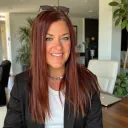
In 2006, I started selling websites to air conditioning contractors. Nobody thought the internet was where the trades were headed. Not the contractors. Not my family. Not the rooms I walked into, where I was usually the only woman and almost always the youngest person with an opinion.
The conventional wisdom was pretty clear: contractors got business from referrals and the Yellow Pages. Websites were for tech companies. I didn't wait for the industry to agree with me. I couldn't afford to. So I built anyway.
Twenty years later, I run an AI-first company that looks very different from the company I once led at 320 people. Today, we're a team of 38, rebuilt around a different operating model and a different view of where this industry is going. I keynote rooms full of contractors talking about AI search, automation, and what comes next. I give away digital platforms to women in the trades because I know what it feels like to walk into an industry without a shortcut, a roadmap, or somebody telling you that you belong there.
And after all of it, this may be the lesson I come back to most:
Permission is a story you can tell yourself to make waiting feel responsible.
Why do smart women keep waiting to be chosen?
This part is especially for women, although I've watched the same pattern play out in plenty of businesses regardless of gender. A lot of us learned some version of the same rules early: be excellent. Be patient. Be easy to work with. Keep producing, and eventually somebody will notice. At some point, the right person will invite you into the room where the bigger decisions get made.
Sometimes that invitation comes. Sometimes it doesn't.
What I learned from spending two decades in rooms where I was often the only woman is that opportunity isn't distributed according to some objective measure of readiness. Relationships matter. Visibility matters. Confidence matters. The people already in the room tend to know other people already close to the room.
For a long time, I thought my job was to become unquestionably ready before I raised my prices, pitched the bigger stage, challenged the accepted answer, or took up more space. Then I started paying attention. Plenty of people speaking confidently weren't more prepared than I was. They were simply willing to speak before they had every answer.
That changed something for me. I stopped waiting to be picked. I started making the pitch, saying the thing, building the idea, and letting the results determine what happened next. A lot of the most important things in my career happened after that shift.
What does "taking the pen" actually look like?
Taking the pen isn't a mindset exercise. It's usually a series of very practical decisions that feel uncomfortable right before you make them.
Say the thing before you're completely sure
Years ago, I started telling contractors that the traditional website was going to become something much bigger. Websites wouldn't just sit there waiting for homeowners to click through pages. They would become connected operating systems, tied to search, data, automation, AI, and eventually agents acting on behalf of customers and businesses.
Some people understood it immediately. Some smiled politely. Some thought we were getting way ahead of ourselves. I kept talking about it because I believed the direction mattered more than whether everyone agreed with the timing.
Being early doesn't automatically make an idea right. But if you wait until an idea is obvious to everyone, the opportunity to learn ahead of everyone else is already gone.
Rebuild before you're forced to
CI Web Group once operated with roughly 320 people. Today, we're a team of 38. That didn't happen because cutting headcount was the goal. It happened because the company itself had to change.
AI was changing the work. Automation was changing the work. Our technology, service model, and internal systems were changing. Trying to preserve the old structure while building an AI-first company didn't make sense.
Rebuilding meant making difficult decisions about what the company needed to become and how it needed to operate. There wasn't a consultant standing beside me with a perfect playbook, and there certainly wasn't a permission slip saying now was the right time. There were signals, data, technology changes, and a decision.
Waiting until every agency was forced to make the same changes would have meant giving up the time we needed to experiment, build, get things wrong, and improve.
Give before someone asks you to
We give away Hydra OS builds to women-owned trades businesses. There wasn't a committee that told us to do it. There wasn't an elaborate ROI model behind it either.
I'd spent years watching women build businesses in an industry where access, capital, visibility, and opportunity haven't always been distributed evenly. At some point, talking about supporting women in the trades wasn't enough for me. I wanted to put something tangible behind it.
Khadija Head and Head's Plumbing became the first recipient. Her launch turned into one of the projects our team was most excited to put into the world.
Sometimes conviction is deciding you don't need another meeting before you do something you already know matters.
Write the book before you feel like an author
Hands Up exists because I stopped waiting to feel like someone who was supposed to write a book. There was always another reason to wait. More experience. More stories. A cleaner lesson. A better time.
Eventually, I realized the material wasn't something I needed to go find. I had already been living it.
The book also reminded me of something important about this whole idea of taking the room: you can choose yourself and still acknowledge the people who helped you get there. Those things aren't in conflict.
Charge what the work is worth
Permission shows up in business decisions too. Sometimes waiting to feel ready looks like underpricing. Nearly every meaningful price increase I've made felt early when I made it. Looking back, most of them were probably late.
The market doesn't send a formal notice saying you've earned the right to charge more. You have to look at the results, the cost of delivering the work, the value being created, the team required to support it, and the direction of the business. Then you make the decision.
What about the people who opened doors?
Choosing yourself doesn't mean pretending you built everything alone.
Some of the most important opportunities in my career came through people who were willing to make an introduction, put my name forward, invite me into a room, or take an idea seriously before it had broad industry acceptance. Many of those people were men. That's an important part of the story.
They didn't give me permission. They gave me access. There's a difference. Permission says, "You're allowed to do this." Access says, "Here's an opportunity. What you do with it is yours."
I still had to walk into the room. I still had to know the material, do the work, handle the pressure, and prove that I belonged there. But someone opening a door can change the trajectory of a career.
For people who already have influence, that's worth remembering. You don't have to speak for someone or decide when they're ready. Sometimes the most useful thing you can do is make the introduction, extend the invitation, take the meeting, or make sure the opportunity is visible. Then let them do something with it.
And if you're the person waiting for that introduction, don't make it a prerequisite for starting. Build the proof. Make the ask. Create the work. Access helps. It should never become another form of permission.
The question that ends the waiting
Whenever I catch myself hesitating on a price increase, a stage pitch, a hire, a new product, or a bigger bet, I ask myself one question:
Am I waiting for information, or am I waiting for permission?
Those are not the same thing. If I'm waiting for information, I go get it. Make the phone call. Pull the numbers. Run the test. Ask the customer. Talk to the team. Information has a retrieval cost, and most of the time it also has a reasonable deadline.
But if I already have the information and I'm still sitting there hoping someone else will make the decision feel safe, that's different. That's usually permission. And at that point, the person I'm waiting for may not exist.
There's no universal committee reviewing whether you're ready to raise the price, pitch the keynote, write the book, start the company, rebuild the team, or say something the room doesn't agree with yet. Eventually, you make the call. I spent years thinking readiness would feel obvious when it arrived. It rarely does.
Your move this week
Don't overhaul your life. Make one move you've been delaying because you're waiting to feel more qualified, more certain, or more validated than you do right now.
Send the email you've been drafting for three weeks. Raise the price you've been afraid to raise. Pitch the stage, the podcast, or the partnership. Apply for the thing you're "not quite ready" for. Say what you actually think in the meeting instead of editing it into something safer before it leaves your mouth.
Then pay attention to what happens. Maybe it works. Maybe it doesn't. Maybe the answer is no. Maybe you learn something that changes the next decision. That's still movement.
You don't need to announce that you're becoming bolder. You don't need a post about the leap you're about to take.
Make the move. See what it teaches you. Then make the next one. Read my advice to young female entrepreneurs if you need the longer version of this same lesson.
Nobody is coming to hand you permission. Take the damn pen.