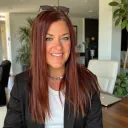
I became a grandmother. That sentence reorders priorities faster than any board slide. My grandson Dallas did not walk into my office with a strategic plan. He walked into my life and changed the clock — how far out I think, what "winning" has to mean, and what kind of company, book, and body of work I am willing to leave behind.
I will not invent medical details or sentimental scenes for content. This is about leadership shift — the operator version of becoming a grandmother.
Time horizon is a strategy
Before Dallas, I could rationalize short-term wins — another quarter, another launch, another fire fought. Grandmotherhood makes short-termism feel smaller. Not because revenue stopped mattering. Because revenue without a legacy is just a scoreboard with no one you love on the other side of it.
That is why I write about legacy over ego and building something that outlives you. The restructure at CI Web Group — 320 to 38, revenue north of ten million — was never about proving I could cut. It was about building a company that could serve clients honestly long after my ego needed a headline.
Standards, softened and sharpened
Grandmotherhood did not lower my standards. It sharpened what they are for. I still ask the one-question test on every product and agent workflow: does this make the customer's experience genuinely more useful and helpful? That is systems and soul — the same test I run on what we build for trade owners who also have families waiting at home.
What changed is impatience with work that does not compound. Clever campaigns, brochure websites, agency retainers that protect vendors — I already opposed them. Now I oppose them with a generational clock. Dallas will inherit a world run by agents and entities. I am building and teaching for that world in Hands Up, in essays like Your Brand Is Now a File AI Reads, and on stage — because the operators who win his decade will be the ones who built infrastructure, not slides.
Ego builds for applause. Legacy builds for the kid who will ask what you did when the industry turned — and mean it.
Leadership as stewardship
CEO language can get theatrical. Grandmotherhood stripped some of that from me. Leadership became stewardship: of people who trusted the cut, of clients who own their assets on our platform, of ideas that have to stay true when the old model offers easier money.
The client-first inversion reads differently when you think in decades. You stop hoarding knowledge in heroes' heads and start encoding it in systems — so the company helps customers when no one star is in the room. You stop locking clients in contracts and start earning retention — the same way you want your grandchildren to choose you freely, not because they have no options.
What I want Dallas to see
Not a perfect grandmother. A honest one. Someone who bet on where the world was going since 2006, who took the Daikin risk in 2008, who rebuilt when the old playbook still paid, who wrote the letter in Hands Up instead of hiding behind corporate speak.
Dallas changed my leadership by giving me a face for the future — not an abstract "next generation" in a keynote, but a child who will live in the world my decisions help shape. That is not softness. It is the hardest accountability I have ever had. And it is the one that finally made legacy operational, not poetic.